22 October 2026, 4 min read
The jaali as a pattern
A stone screen that keeps out the sun and lets in the air. We cut it into cloth.
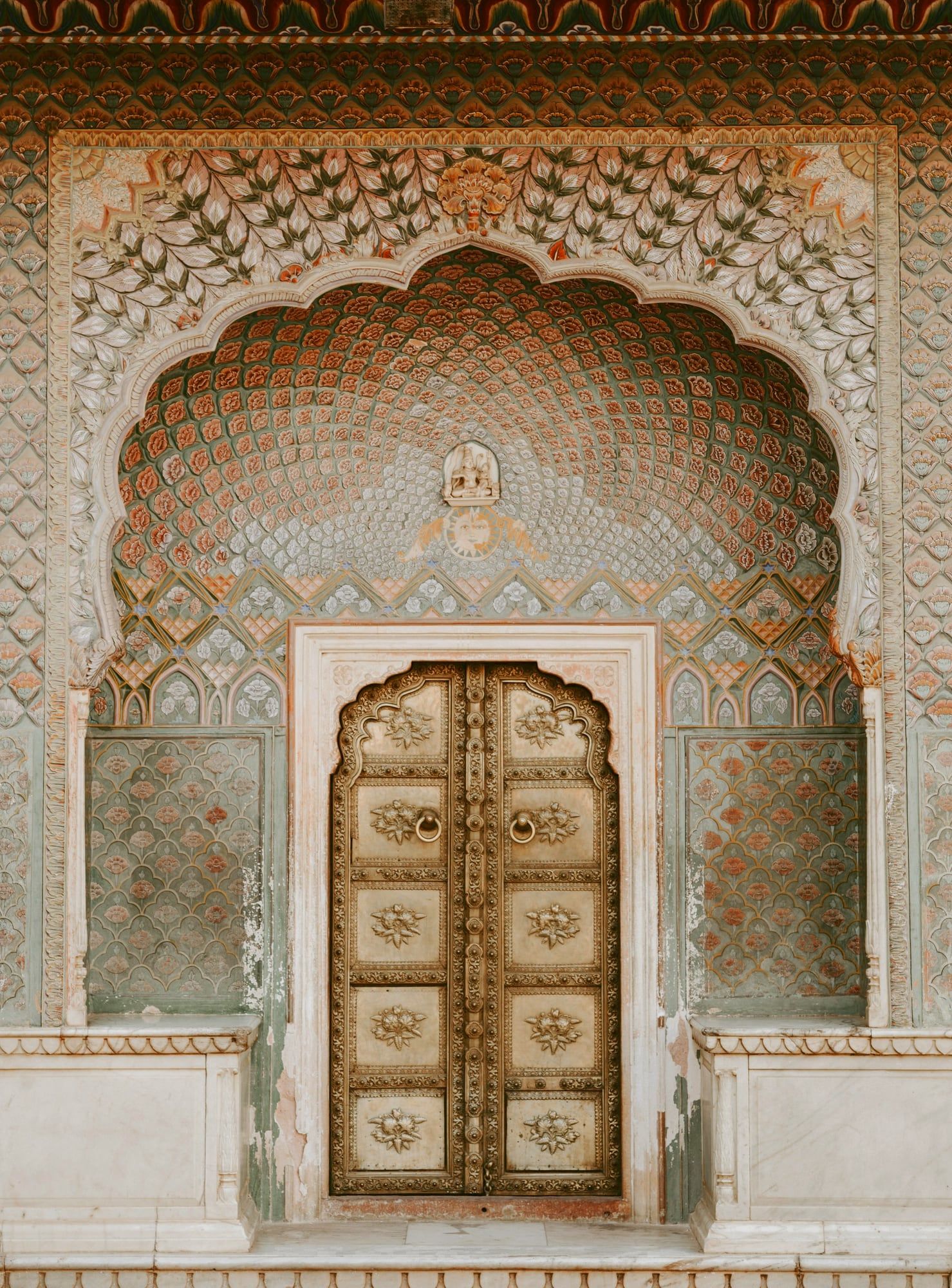
Walk into any courtyard in the old city at noon and look at the floor. The light does not arrive in one piece. It comes through a jaali, a screen of stone pierced in a pattern, and lands as a field of small stars.
The screen has a job. It keeps out the direct sun and the dust, it lets the air move, and it lets the people behind it see out without being seen. The pattern is not decoration added afterwards. It is the structure.
The star and the cross
The pattern we keep returning to is the oldest and the plainest: an eight point star, made by turning one square against another, joined to its neighbours by a short cross. Repeat it and the stars and crosses lock together with no gaps and no leftovers. It is the cell our mark is drawn from, and the cell the pavilion on our home page is built from, one instance at a time.
Cutting it into cloth
The Jaali set began with a question from the finishing table. If the screen works for a wall, does it work for a shoulder? We drew the cell at the scale of the stone, about the width of a palm, and cut it into heavy cotton canvas. The edges are sealed by hand so the cloth does not fray.
On the body it does what it does on the wall. It lets air through where you need it most, across the shoulders and down the side seams, and it throws a small pattern of light onto the skin underneath.
What we do not do
We do not print a photograph of a jaali onto a T shirt. The pattern only means something when it is cut through. A screen you cannot see through is a wallpaper.