Story
Tradition, rewritten
Rivaay comes from rivaaj, custom. We changed one letter.
The name
Rivaaj means custom, the way things have always been done. Rivaay is the same word with one letter changed. That is the whole idea: keep the hand, the cloth and the pattern, and change the shape.
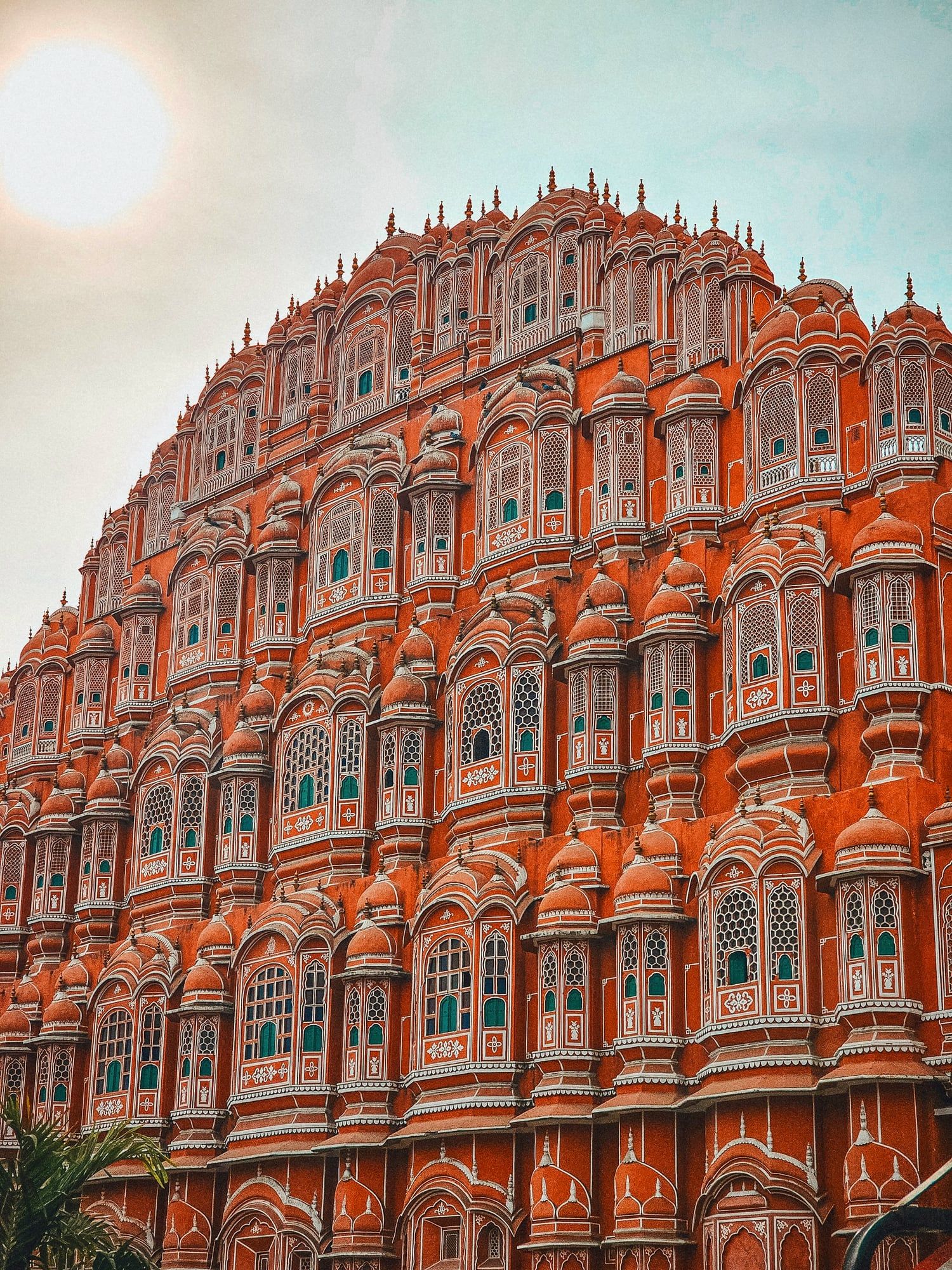
Jaipur
The label is cut in Jaipur, a city painted one colour in 1876 and kept that colour since. It is a city of screens and courtyards, of stepwells and stone umbrellas on rooftops, of bazaars named after the trades that still work in them. We take its architecture as our pattern book and its colours as our palette.
The ateliers
About forty people make the collection in five workshops: the aari room in Johari Bazaar, the long print table in Sanganer, the Chhipa dye yard in Bagru, the Dabu printers by the river at Akola, and the finishing table in Mansarovar where every piece is pressed, checked and tagged. Every piece page names the workshop and what they did.
The makers
Imran runs the aari room and draws every motif in chalk before a needle touches it. Rekha cuts. Mohan prints. Salma ties bandhani on her veranda with three neighbours. Dinesh finishes, and sends back anything that is not right.
The fabrics
Handloom denim dyed in indigo vats in Bagru. Cotton mulmul light enough to read through. Khadi with the slub left in. Canvas heavy enough to hold a cut lattice. We use natural dyes where they hold, and say so where they do not.
The pink city as a palette
Terracotta from the walls at dusk. Indigo from the vats. Raw cotton, undyed. Cobalt from one painted door in the old city, used once per look at most. Gold for the thread.
Five of the forty
-
The aari room
Imran
Draws every motif in chalk before a needle touches the cloth.
-
The cutting table
Rekha
Cuts by hand from paper patterns, and binds the edges in bias.
-
The print table
Mohan
Presses sixty blocks a metre with the heel of one hand.
-
Bandhani
Salma
Ties each dot on her veranda, with three neighbours.
-
Finishing
Dinesh
Presses, checks and tags. Sends back anything that is not right.
The makers are invented, and so are the portraits.