8 October 2026, 5 min read
A day in the block print workshop
Sanganer, seven in the morning to six at night. Sixty presses a metre, by hand.
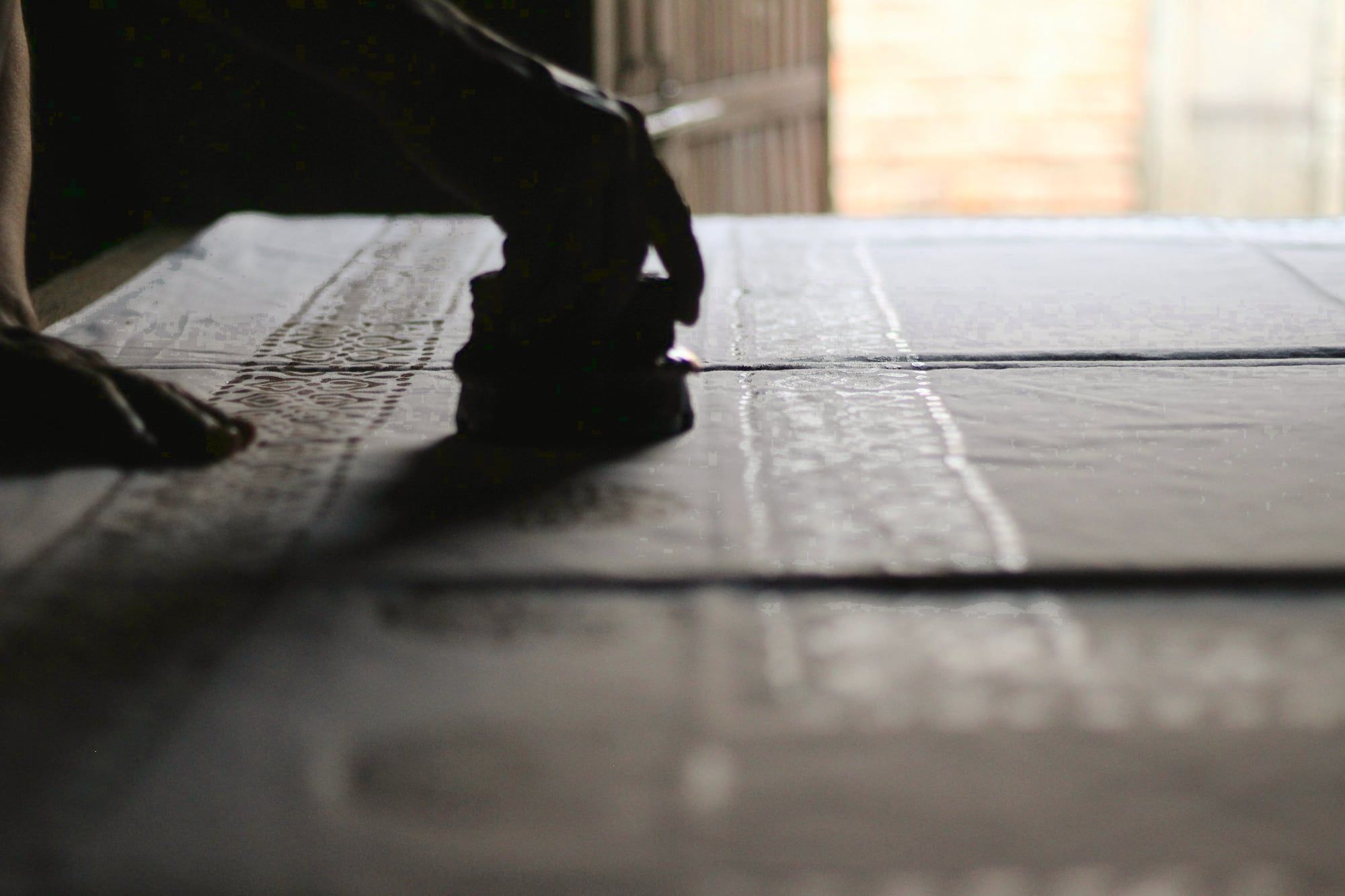
The long table in Sanganer is twenty metres of padded wood. By seven the first length of cotton is pinned down and Mohan is mixing the colour in a shallow tray lined with a wet cloth, so the block picks up an even film and not a puddle.
The blocks
The blocks are teak, carved by a family in Pethapur who have cut them for four generations. A design needs one block for each colour, and one more for the outline. The carver works from a drawing pinned to the wood and leaves the raised lines a little proud, because a block wears down over thousands of presses.
The press
Mohan lifts the block, taps it twice on the tray, sets it on the cloth by eye, and strikes the back with the heel of his hand. Then the next, edge to edge, sixty times a metre. The only guide is a small pin carved into the corner of the block that lines up with the last impression.
A good printer leaves no gaps and no double prints. A great one leaves the tiny shifts that tell you a hand did it.
The drying and the wash
The printed length dries in the sun on the ground outside, then goes to the river tanks to be washed, which sets the colour and takes away the gum. A two colour print means the whole day happens twice.
What it costs
Time. A metre of the Bagru midi takes one printer about forty minutes, before the wash. That is why we do not print more than we can sell, and why the print on your skirt is not quite the same as the print on anyone else’s.